
What do I do after my child receives a disability diagnosis?
Published

I’m Erika, mum to eight-year-old Jay. My husband Ryan and I have been navigating the disability world for seven years now. If you’re reading this because your child has just received a diagnosis, you’re waiting on an assessment, or somebody has raised concerns about their development, I wanted to share what those early years looked like for us and what I’ve learned since.
I’ve found it difficult to work out how much of Jay’s story I should share publicly. I don’t want to put things out there that he might be uncomfortable with when he’s older. It’s his story to tell but I can talk about my experience as his mum, because I remember how overwhelming those first few months were.
There’s a huge amount of information out there but when you’re right at the beginning, you don’t know what information you need, let alone where to find it. And while it’s helpful to have somebody explain the practical things, sometimes you just want to hear from somebody who’s been through it and actually ‘gets’ it.
The short version: you don’t need to understand your child’s entire future today. You just need to work out what comes next. Keep your reports in one place, start a simple timeline, write your questions down before appointments, take somebody with you if you can, find out what support is available where you live, and look after yourself too. It’s a day by day process and sometimes, it might even be an hour by hour process.
If you’re in the first few weeks after a diagnosis
You don’t need to work everything out now. These are the things I’d concentrate on first:
- Keep copies of reports, letters, referrals and assessments somewhere you can find them.
- Start a basic timeline of appointments, assessments and milestones.
- Write questions down before appointments and take somebody with you if you can.
- Before leaving an appointment, ask what happens next and who you need to contact.
- Ask your GP, paediatrician or child health nurse what early intervention and support services your child can access where you live. In some places, including Australia, young children can get early help without a diagnosis.
- Find out whether there’s financial or practical support for carers in your area. Many families don’t realise they might be eligible.
And then, if you’ve spent the whole day researching or organising appointments, put it away for a bit and spend time with your child. They’re still exactly the same person they were before you received this information.
If you’re still waiting for an assessment
The waiting can be its own kind of hard. When Jay was first red-flagged, every developmental paediatrician we called had closed their books. What got us in was our community health centre going back to our local hospital on our behalf, so it’s worth asking the people already involved whether they can help.
- Ask your GP or child health nurse for a referral, and ask if you can be on more than one waiting list or a cancellation list.
- Ask what support your child can get while you wait. You don’t always need a diagnosis to start getting help.
- Start keeping notes and copies of everything now. It will make the assessment easier.
- Write down what you’re noticing day to day, with dates. It’s easy to forget the details by the time you’re finally in the room.
If you’re in Australia, there’s more on early connections and Thriving Kids in the Australian section further down.
How it started for us
Before all of this began, I wasn’t concerned about Jay’s development.
I used to own a business working with babies, and from what I’d seen, boys often seemed to develop a little more slowly than girls. So, just before his first birthday, when he wasn’t crawling or pulling himself up to stand, I didn’t give it much thought.
The only reason we went to see a child health nurse was because of my mum. She’s an emergency nurse, and she’s also spent most of my life dealing with her hypochondriac daughter (me!), who regularly turns up with some new bump or scrape only to be met with an eye roll.
So when she told me I needed to get Jay checked, I thought, Well, if she’s saying that, I’d better go.
We went to our local community health centre the day before Jay’s first birthday. I don’t remember much of that appointment, but I do remember him being red-flagged for pretty much everything and being told we needed to see a developmental paediatrician urgently.
Mum was with me, and afterwards we spent the rest of the day frantically calling developmental paediatricians. Every single one had closed their books. By the time we’d worked our way through the list, the day was over and we hadn’t managed to get an appointment.
The next day was Jay’s first birthday, and I had to pretend the appointment hadn’t happened. I wanted to celebrate my son’s birthday without having to think about everything we’d been told the day before. It was too much for me to process. I also had a huge win in my career – I was being interviewed on Mamamia’s parenting podcast. How I got through that day, I do not know.
The following day, the community health centre called. They’d contacted our local hospital and managed to get Jay an appointment with a developmental paediatrician within two weeks.
From there, we started seeing all sorts of specialists. There were developmental paediatricians, blood tests, neurology appointments, physio, EEGs, an MRI, genetics and so many other things. Everyone was trying to work out what was going on, and to me, as somebody with no medical understanding, it felt like one big process of elimination.
During that time, all sorts of possibilities were being mentioned. Different conditions, different diagnoses, different explanations. Sometimes we’d receive reports mentioning things that hadn’t even been discussed with us in person.
I made a deliberate decision not to Google any of them. I knew it wouldn’t be good for my mental state, especially when we didn’t have a concrete answer about what was going on.
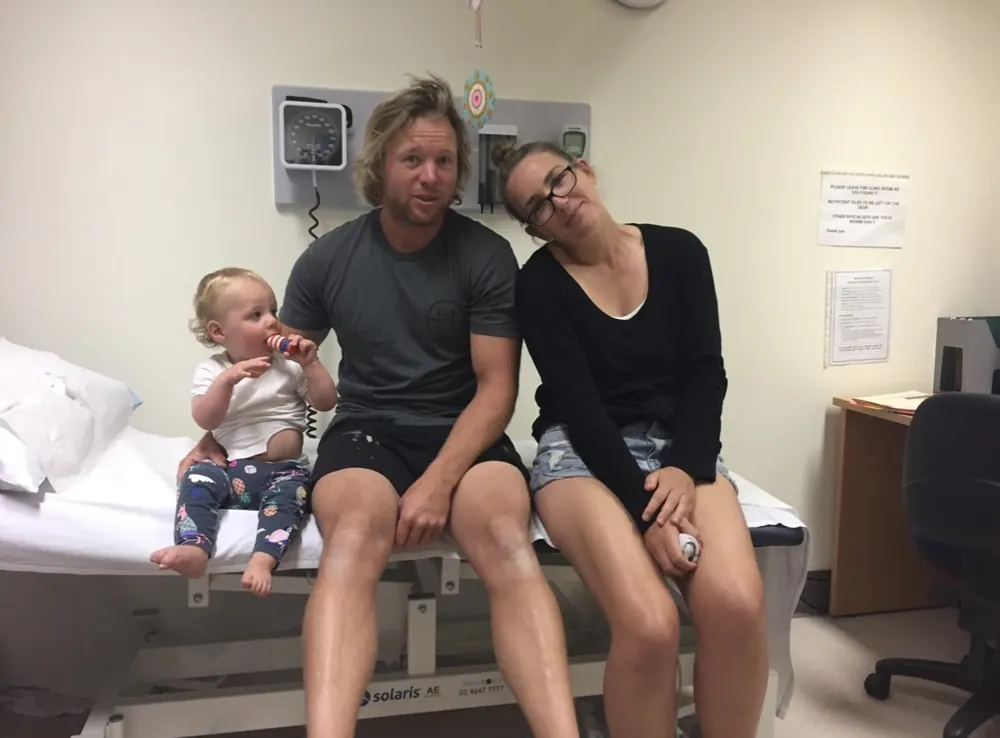
Receiving Jay’s diagnosis
Around 18 months after that first appointment, we finally received Jay’s diagnosis.
Ryan and I were together on a video call with his geneticist. Jay was doing intensive therapy at the time, so we’d locked ourselves in one of the meeting rooms to take the call.
Our geneticist was amazing. She told us that Jay was a blank canvas and that “the sky’s the limit”. Ryan and I loved that so much we ended up getting it tattooed on us.
We’ve had some pretty full on interactions with medical professionals over the years, especially early on, so the way she delivered that news has always stayed with me. She was compassionate, positive and understood just how much that conversation meant to us.
I think some medical professionals forget that while this might be another appointment in their working day, for the parents sitting opposite them, it could be one of the biggest moments of their lives.
Even though our geneticist handled it beautifully, receiving the diagnosis was still difficult.
Not long after that appointment, I ran into a family member while I was out shopping. I was completely dazed, almost like a zombie, and I ended up breaking down in front of her because I felt like I didn’t know my own child anymore. He was sitting in the pram with his mum who felt like she was on the verge of a nervous breakdown. I didn’t actually know what to do.
Which sounds ridiculous when I say it now, because of course I knew Jay. He was exactly the same little boy he’d been before that phone call. But suddenly there was this whole new reality attached to him, and I didn’t understand what any of it meant.
I’ve blocked out a lot of that period. I remember crying in the shower because I didn’t want to cry in front of Jay, and then getting out and carrying on with whatever needed doing.
At first I was crying every night, then every second night, then every third night, until eventually it wasn’t happening all the time.
I still cry now. But these days it’s usually about something that’s happening rather than all the things I was terrified might happen in the future.

What I’d do differently in those first few months
I was winging it when we started. I had reports on my phone, on my desktop, buried in Gmail, forwarded between people and probably printed out somewhere in the house.
That mess is a big part of why Ryan and I started building The Jay Way. We wanted somewhere to keep reports, appointments and a child’s timeline together, because I wish we’d had something like that when we were starting out.
I also never wrote down questions before appointments because I thought I’d remember them. Then I’d get into the appointment, hear something upsetting or receive an enormous amount of information, and completely forget what I’d wanted to ask.
There was one appointment where I remember feeling so numb that I couldn’t retain what I was being told or properly participate in the conversation. My brain had gone into autopilot.
That’s why I think having somebody with you at important appointments is so helpful. Ryan or my mum would usually come along, and having another person there meant somebody else could listen, ask questions and remember things when I couldn’t.
These are the questions I’d take to every appointment now:
- What happens next, and who do we need to see?
- Is there anything we should be doing now, or anything that can wait?
- What should we be looking out for as our child develops?
- Are there any supports or services you think we should investigate?
- Can we have a copy of today’s notes, results or report?
- When should we follow up, and who do we contact if we have questions beforehand?
I’d also start keeping a timeline much earlier.
Years later, I’ve been asked things as significant as when Jay first walked, and I can’t remember. I know roughly when it happened, but as soon as he started walking, we were already working towards the next goal.
It wasn’t because it wasn’t an enormous milestone. There have been so many milestones, appointments, assessments and changes over the years that it’s impossible to keep all of them in your head.
What reports should I keep?
I’d keep anything that might help somebody understand your child or their history later on.
That includes specialist letters, assessments, therapy reports, referrals, school or childcare information, important emails, funding documents and equipment recommendations.
I’d also record major milestones and changes as they happen, because it’s easy to forget the details once you’re a few years down the track.
You might never need some of those documents again, but it’s much easier to keep them as you go than to try to track down an assessment from three years ago while somebody is waiting for you to provide it.
Asking for support: what I wish I’d known
Wherever you live, there will probably be some kind of funding or support system for children with disability. For us in Australia, that’s the NDIS. I can only speak to our experience, but I think the lessons apply wherever you are.
When we first entered the NDIS in 2019, just after Jay turned one, nobody sat us down and explained how it all worked. It was a friend who told us about it. Until then, we had no idea.
We applied and initially received what seemed like a decent amount of funding. I remember thinking it was amazing, until we started paying for therapy and I realised how quickly that money could disappear.
Eventually, I worked out what I believed Jay needed and we sought a review. We gathered supporting reports and letters from the professionals involved in his care and provided information about how his disability affected everyday life.
Our funding increased significantly. That was our experience, though, and it doesn’t mean another family will receive the same amount. The NDIS has also changed a lot since then, including in 2026, so check how it works now.
Something I struggled with at the beginning was guilt. I felt like asking for more funding meant I was taking money away from somebody else who might need it more.
People sometimes say you need to describe your child on their worst day when you’re in any NDIS appointment, and we have applied this for every meeting we’ve had. It’s so hard but so necessary.
We also had a support coordinator, which was helpful for us because they understood the system. When you’re trying to learn an entirely new language of funding categories, reports, providers and reviews, having somebody who knows what they’re doing can make an enormous difference. Not every family gets that kind of help, so it’s worth asking what’s available in your circumstances.
Do I need to do every therapy?
This is something I still find difficult, even now.
My personality is very much that if there’s something that might help my child, we’re going to try it. So we tried a lot.
During COVID, Jay was able to do intensive therapy frequently because places became available when other families couldn’t travel.
About two years into our therapy journey, I was burnt out. Jay was starting to resist some of the therapy too, and I remember thinking that I couldn’t keep going at that pace.
But then I’d immediately worry that reducing therapy might mean I wasn’t doing enough for him.
That was the difficult part. Jay had made enormous progress, and in my mind that progress was connected to all the therapy he was doing.
I’d think, He’s doing so well, maybe we can pull back a bit.
And then almost immediately, But what if he’s doing so well because we’re doing all of this?
Eventually we did reduce some of it, although we never stopped therapy altogether.
As Jay got older, his needs changed. Once school entered the picture, there wasn’t enough time or energy to fit everything in, and things like emotional regulation and managing the school environment became more important.
I’ve also realised that I don’t always want to be Jay’s therapist.
I don’t want every time we play together to become an opportunity to practise a skill. Sometimes I want to sit with my son and play, or do something fun without thinking about what we’re working on.
I’ve said before that therapy can feel like it’s never enough and always too much, and I still think that’s the best way I can describe it.
The right therapy and frequency will depend on your child’s needs and the advice of their treating professionals. I’m only talking about how we’ve navigated it as a family.
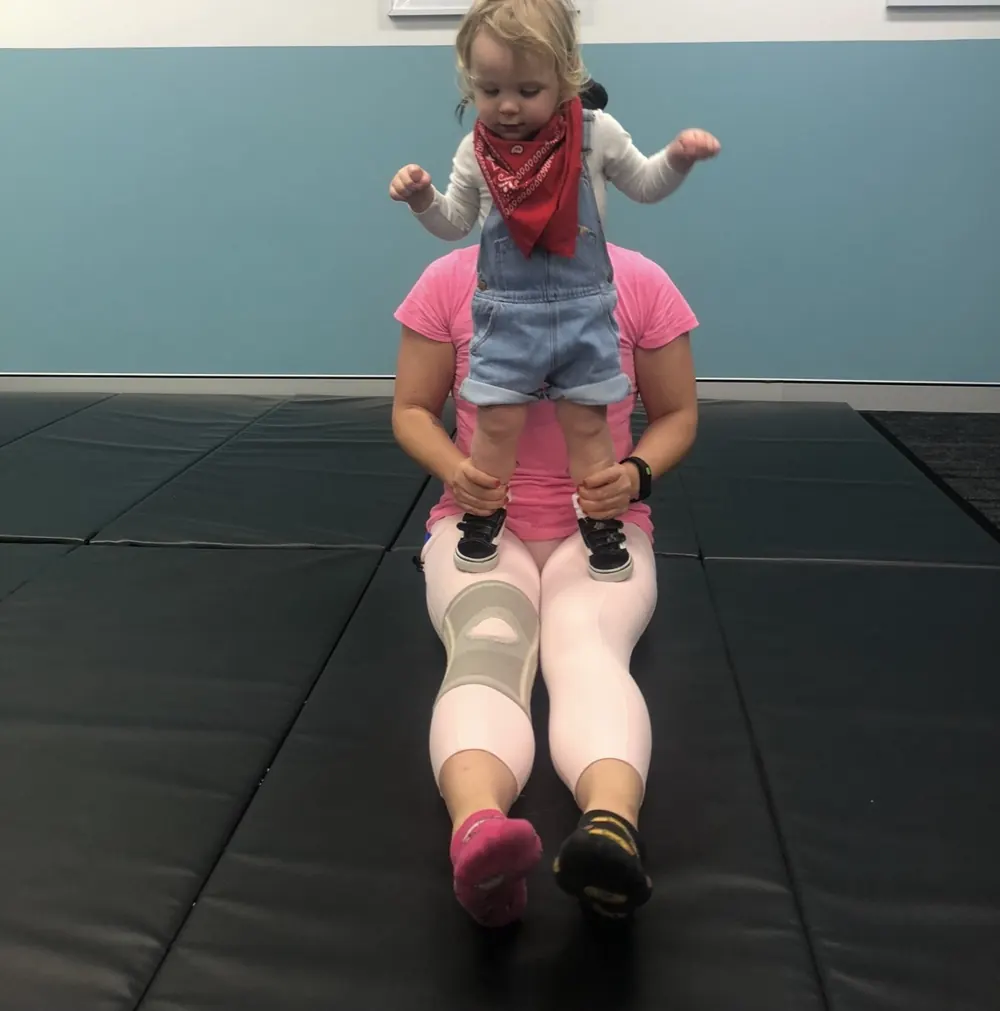
How do I know if a therapist is right for my child?
This depends on the child, and it’s something we’ve learned through experience.
The therapists who have worked best with Jay have been the ones who took the time to get to know him.
They didn’t expect him to walk into a room and immediately do whatever they’d planned for the session. They built a relationship with him, worked out how to engage him and understood when he needed a bit more time or space.
We’ve also tried therapies and therapists that weren’t right for him. Sometimes it was the approach, sometimes it was the person, and sometimes Jay just didn’t click with them.
I’ve learned that it’s okay to recognise that and move on. Not every therapist is going to be the right fit for every child.
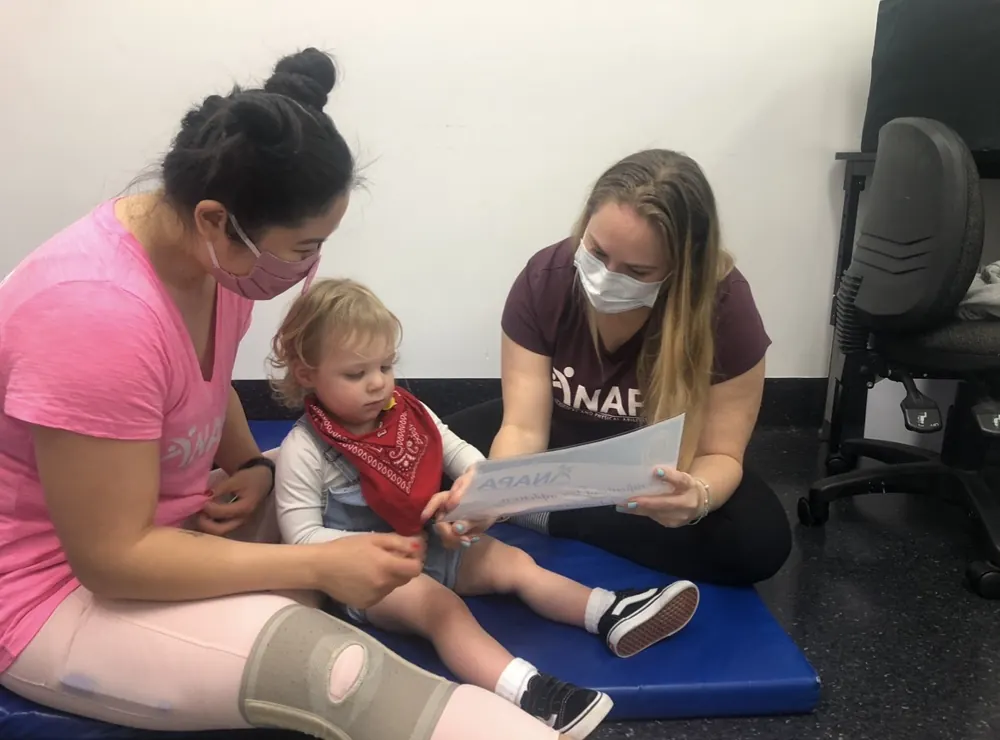
Support workers, respite and finding people you trust
We’ve been fortunate to have respite funding at different times, and we’re also lucky to have a strong family support network.
When things have been difficult, I’ve leaned on Ryan and my family, and sometimes getting away for a night has been exactly what I’ve needed.
But having support available and feeling comfortable leaving your child with somebody are two very different things.
Finding people I trust with Jay has been difficult, and I’ve become much more careful about the checks I do.
Don’t assume somebody has automatically been screened because they work as a support worker or come through a particular service. Ask about their experience, references, qualifications where relevant, and which background checks apply to their role where you live.
Beyond the paperwork, I pay attention to how Jay responds to somebody. I can tell when he enjoys being around a person, when he’s excited to see them and when he feels comfortable.
And I’ve learned to trust my instincts a lot more than I did at the beginning.
The financial side of having a child with disability
One thing people don’t always realise is how much having a child with disability can cost, even when you have funding.
There are specialist appointments, medical expenses, equipment, sensory clothing, glasses, travel, and sometimes adapted equipment that costs thousands of dollars.
There are also all the smaller things you don’t think about until you’re living it, like choosing where to sit on a plane because you know certain seats or situations will be more difficult for your child.
Then there’s the impact on work.
Before Jay’s diagnosis, I ran The Sleep Dept, my own business helping exhausted parents with their babies’ sleep.
I tried to keep it going for about two years after his diagnosis. I hired people, reduced my workload and tried restructuring things, but the work itself was emotionally demanding. When somebody contacted me about their baby’s sleep, they were usually already exhausted and at breaking point.
Eventually, the income I was making wasn’t sustainable, and I made the difficult decision to sell the business.
I know that probably sounds like a huge decision, choosing between my career and my child, but it didn’t feel like a choice to me.
I loved my business and what I’d built, but at that point Jay needed me, and that was where I wanted to put my energy.
Most countries have some kind of payment or allowance for parents caring for a child with disability, and it’s worth finding out early what you might be eligible for.
Choosing a school
I wish I had a straightforward answer to this, because finding the right school for Jay has been one of the most difficult parts of our experience.
We knew mainstream school was going to be challenging for him, but the specialist options available didn’t seem to fit him either. We looked everywhere. We travelled interstate and overseas, toured schools all over Sydney, spoke to advocates, other parents and therapists, and started researching options years before Jay was due to begin school.
Eventually, Jay started at our local mainstream school because, at that point, it was the only realistic option we had. His school has been supportive, but we’ve also learned that having wonderful people at a school doesn’t automatically mean the environment itself is right for your child.
Jay did really well in Kindergarten last year, but Year 1 has been difficult. That’s been one of the biggest reminders for me that this whole journey isn’t linear. Your child gets older, the expectations placed on them increase, their environment changes, and something that worked when they were four might not work when they’re eight.
My advice would be to start investigating early if you suspect school may be difficult, and to ask your local education department what adjustments and options are available.
Finding other parents who understand
I don’t know how I’d have got through some of the more difficult periods without the other disability mums I’ve met.
I wish I could tell you exactly how to find your people, but mine happened almost by accident.
I was supposed to attend a retreat in Byron Bay for mums of children with disability. COVID meant the retreat didn’t happen, but the woman organising it took me under her wing and introduced me to a handful of other mums.
Those women have become some of the most important people in my life. I genuinely do not know what I would do without them.
We go away together a few times a year, and it’s such a relief being around people who understand this world without needing everything explained.
We can talk about things that might sound completely bizarre to somebody outside the disability community, share suggestions, laugh about things and have conversations without worrying that somebody is going to say something offensive or miss the point.
I don’t have to give the entire backstory every time I want to talk about something that’s happened.
If you don’t have anyone like that in your life yet, look for carer organisations, parent-to-parent groups and charities or online communities for your child’s condition. In Australia, Carer Gateway offers peer support too.
What should family and friends say?
Please stop saying, “I’m sure it’ll be fine.”
I know people mean well, but sometimes it isn’t fine. Sometimes a child does receive a diagnosis, and sometimes the thing a parent is terrified about happens.
And just because your friend’s child did something at a certain age doesn’t mean mine will.
When somebody opens up to you about their child, you don’t have to make their fear disappear. You can be uncomfortable in an uncomfortable conversation.
Listen to what they’re telling you, acknowledge that they’re scared and don’t immediately try to push those feelings away because they’re difficult to hear.
If I could choose what somebody said to me instead, it would be something like, “Tell me everything. Download. What are you scared of? I’ll help you.”
That’s all I would have needed.
How will I survive this?
I think this might be the question underneath all the others. You can be worrying about appointments, funding, therapy, school and a hundred other things, but you’re wondering how you’re going to manage everything that’s happening.
For me, the early years involved pulling away from people, doing a lot of research and putting most of my energy into Jay.
That won’t be how everybody copes, but it was what worked for me. I needed time to process what was going on before I felt ready to talk about it.
And when I say I put my energy into Jay, I don’t just mean appointments and therapy. I mean spending meaningful time with him.
Over the years I’ve also realised how important it is that I have support too.
Sometimes that’s been Ryan, sometimes my family, sometimes getting away for a night, and sometimes spending time with other disability mums who understand what I’m talking about.
I don’t think there’s one right way to cope with something this big and what you need at the beginning might be completely different from what you need a few years down the track.
Will I ever feel normal again?
I accepted Jay’s disability early on, but I’ve realised that acceptance isn’t something you do once and then never have to think about again.
Life keeps changing. You can go through a period where everything feels settled, and then something new happens and you’re working it all out again.
School has probably been the biggest example of that for us.
But there’s also another side to this life that I couldn’t have understood when Jay was first diagnosed.
Having Jay has given Ryan and me a massive perspective shift. We make an effort to live our lives. We travel, we go on adventures, we celebrate things, and we appreciate moments that we probably wouldn’t have given a second thought to before.
When you’ve watched how hard your child has worked to achieve something, even the most ordinary milestone can feel huge.
That doesn’t mean the difficult parts have gone away. They haven’t, and some things are still hard. But there’s also so much happiness in our lives and I don’t think I could have understood that when we were sitting in those early appointments trying to work out what Jay’s future might look like.
One thing that helped me greatly in that early period was Melanie Dimmitt’s book Special.
Reading about the experiences of other parents who understood this world made me feel less alone. There was also a message from an adult with a disability to their parent that stayed with me and I still think about years later. I had the chance to meet Melanie recently (she’s good friends with some of my disability mum friends) and I couldn’t contain my emotion when I hugged her hello. I cried and told her how much her book had helped me. It was such a privilege to meet her.

If you’ve just received a diagnosis, start here
You don’t need to plan the next 18 years today.
Find out when your next appointment is. Put your reports somewhere you can find them. Write down the questions going around in your head. Take somebody with you if you can, and start looking into the supports that might be available to your family.
Then go and spend some time with your child.
They’re still exactly who they were before somebody gave you a diagnosis, and you don’t need to become their therapist, case manager, researcher, advocate and expert overnight.
You’ll learn things as you go. We did, and we’re still learning.
I know this is fucking terrifying. I know it feels unknown. Let yourself feel your feelings. It’s hard, it’s complex, but you will figure it out.
Erika
If you’re in Australia
Checked against official government sources on 20 October 2026. Programs and eligibility change, so check the current information directly.
NDIS early childhood approach. This is for children younger than nine with developmental delay or disability. An early childhood partner can help you understand what’s available and, where appropriate, the process of applying for the NDIS. Children younger than six with developmental concerns can access early connections without a diagnosis or being an NDIS participant. A diagnosis doesn’t automatically mean a child will meet NDIS eligibility requirements.
Thriving Kids. This is a new government program for children aged eight and under with developmental delay or autism and low to moderate support needs. You don’t need a diagnosis. It started on 1 October 2026 and is being delivered by state and territory governments, so what’s available depends on where you live and is still being rolled out (in NSW, more targeted supports are due from January 2027). The government has also announced that from 1 January 2028, new NDIS applicants in this group will be directed to Thriving Kids instead, while children with permanent and significant disability will still be able to access the NDIS.
NDIS changes in 2026. If you already have a plan, the NDIS now talks about a “plan reassessment” when needs change significantly and a “plan variation” for smaller changes. Some changes to how plan budgets are worked out started in October 2026.
Carer Allowance and Carer Payment. These are two different payments through Services Australia. Carer Allowance is a supplementary payment for eligible people providing ongoing daily care and attention. Carer Payment is income support for eligible carers who provide constant care and meet income and assets tests.
Child Disability Assistance Payment. This is an automatic annual payment of up to $1,000 for each child under 16 you receive Carer Allowance for, if you’re getting it for a period that includes 1 July.
Carer Gateway. This provides access to support for carers, including counselling, peer support, coaching and respite.
In NSW. The Companion Card is for people with significant and permanent disability who need lifelong attendant care to take part in community activities. Applications are online and can take up to 18 weeks. The Mobility Parking Scheme has specific mobility and vision eligibility requirements. For school, NSW public education offers adjustments and support in mainstream classes, support classes and Schools for Specific Purposes. Some placements and supports require an Access Request and depend on eligibility and availability.
Support worker screening. Workers in risk-assessed roles with registered NDIS providers generally need an NDIS Worker Screening clearance, and rules for unregistered providers can differ. Check the NDIS Commission’s current guidance.
Useful links
- NDIS early childhood approach
- NDIS eligibility
- Changing an NDIS plan
- Thriving Kids (Department of Health)
- Carer Allowance · Carer Payment · Child Disability Assistance Payment
- Carer Gateway · Carers NSW
- NSW Companion Card · NSW Mobility Parking Scheme
- NSW Department of Education: inclusive learning support · Family Advocacy NSW
- NDIS Commission: worker screening
If you’re outside Australia
I can only speak to the Australian system, but these are the kinds of places I’d look for wherever you live:
- Your government’s pages on support for families of children with disability, including any carer payments or allowances.
- Early intervention services for young children, which your GP, paediatrician or child health nurse should be able to point you to.
- Carer organisations, which often offer counselling, respite information and peer support.
- Parent-to-parent groups and charities for your child’s specific condition.
- Your local education department or school district, for school adjustments and options.
A book that helped me
Special: Antidotes to the Obsessions That Come with a Child’s Disability, by Melanie Dimmitt. Read about the book on Melanie Dimmitt’s website.
About Erika Lamour
Erika is Jay’s mum and co-founder of The Jay Way. Before Jay’s diagnosis, she ran The Sleep Dept, an infant sleep business helping exhausted parents. She lives in Sydney with her husband Ryan and their two children, Jay and Noa.
This article shares our family’s personal experience and general information about disability supports. It isn’t medical, legal, financial or NDIS eligibility advice. Every child’s circumstances are different, and government programs and requirements can change.